
This article was co-written by friends of Alison Kershaw: Kathy Reid, Dr Felicity Millman, Dr Amy McLennan, Associate Professor Zena Assaad, Tom Chan, Sam Backwell, Olivia Reeves, Danny Betay, Stephen ‘Dougie’ Fry, Matthew Phillipps, and Zac Hatfield-Dodds.
Alison Kershaw, a graduate With Commendation from the 2019 first cohort of the Master of Applied Cybernetics, leaves an undeniable, indelible legacy of helping make science more inclusive, more accessible, and above all, more human.
She collaborated with people from all walks of life to advance science and technology in all its forms – from fabrication and makerspaces to building communities of practice and encouraging budding scientists.
Alison exemplified that technology is never neutral; that people should come first when designing systems; and that we have a moral obligation for the consequences wrought by AI tools deployed in the real world, often upon those least able to resist them.
Prior to joining The Australian National University (ANU) School of Cybernetics, Alison worked at the Department of Further Education, Employment, Science and Technology, the South Australian government department that presciently funded the Fab Lab Adelaide pilot, foreseeing the revolutionary impact that 3D printing and local fabrication would have on manufacturing and repair services. Alison helped run the regional ‘Nomadic Fab Lab’ 3D-printing roadshow, which visited Gawler, Clare, Berri, Burra and Murray Bridge.
In line with her people-first values, Alison co-produced Maker Faire Adelaide and volunteered with TEDxAdelaide for many years, as she did with the Adelaide Fringe Festival. She was awarded Volunteer of the Year at the Start Up Adelaide Awards in 2017.
In 2019, Alison joined the very first cohort of the Master of Applied Cybernetics at the 3A Institute, now the ANU School of Cybernetics. Her fellow cohort members remember Alison as fierce and outspoken: staunchly advocating for those whose voices were unheard in a system, with a low tolerance for nonsense, who always tried to find ways to share her knowledge and give back to the School.
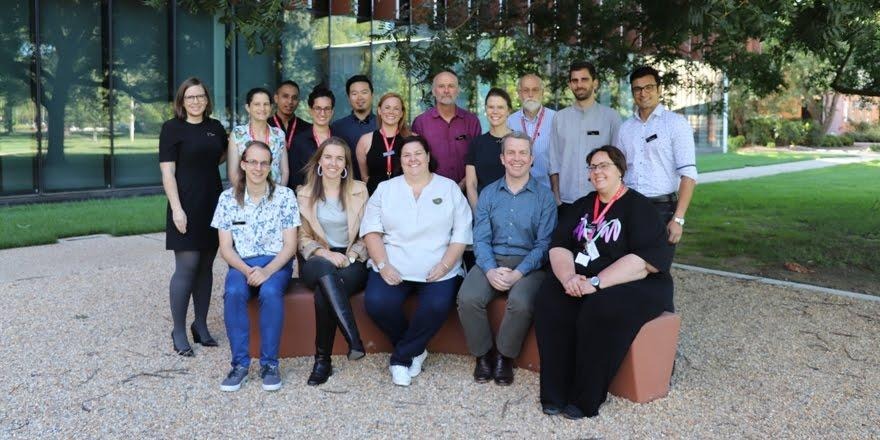
L-R, back: Megan McGrath, Brenda Martin, Danny Bettay, Olivia Reeves, Tom Chan, Felicity Millman, Matthew Phillipps, Charlotte Bradley, Peter MacFarlane, Glen Berman, Hrishi Desai.
L-R, front: Sam Backwell, Zaiga Thomann, Alison Kershaw, Stephen 'Dougie' Fry, Kathy Reid.
Image credit: Lindy Burns.
Alison had presence. Her laugh echoed across a room and around corridor corners. Innately curious, she loved creativity in all its forms. She wore brooches by Australian designers that foregrounded robots, and endangered species and political statements. She loved relaxing with evenings in and a cup of tea, with British TV shows or a podcast. Her life had colour, energy, and passion – all of which she brought to making science more human.
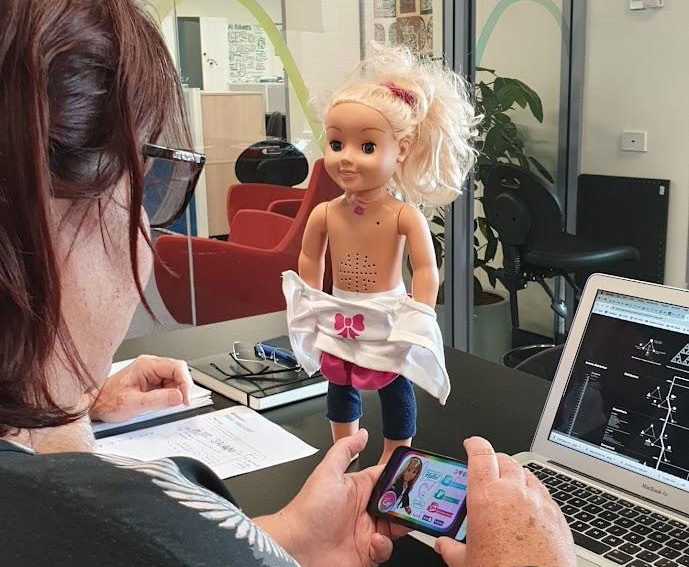
One of Alison’s group research projects during the Masters centred on the My Friend Cayla doll. My Friend Cayla was a cyber-physical system which used speech recognition to engage with young children. While ostensibly a toy, Alison detailed the doll’s ability to gather private data on family routines; one instance of a broader phenomenon known as surveillance capitalism, as well as interrogating the supply chain and interconnected cloud computing systems which afforded Cayla’s speech recognition and synthetic speech capabilities. Unsurprisingly, Alison and Cayla were not friends!
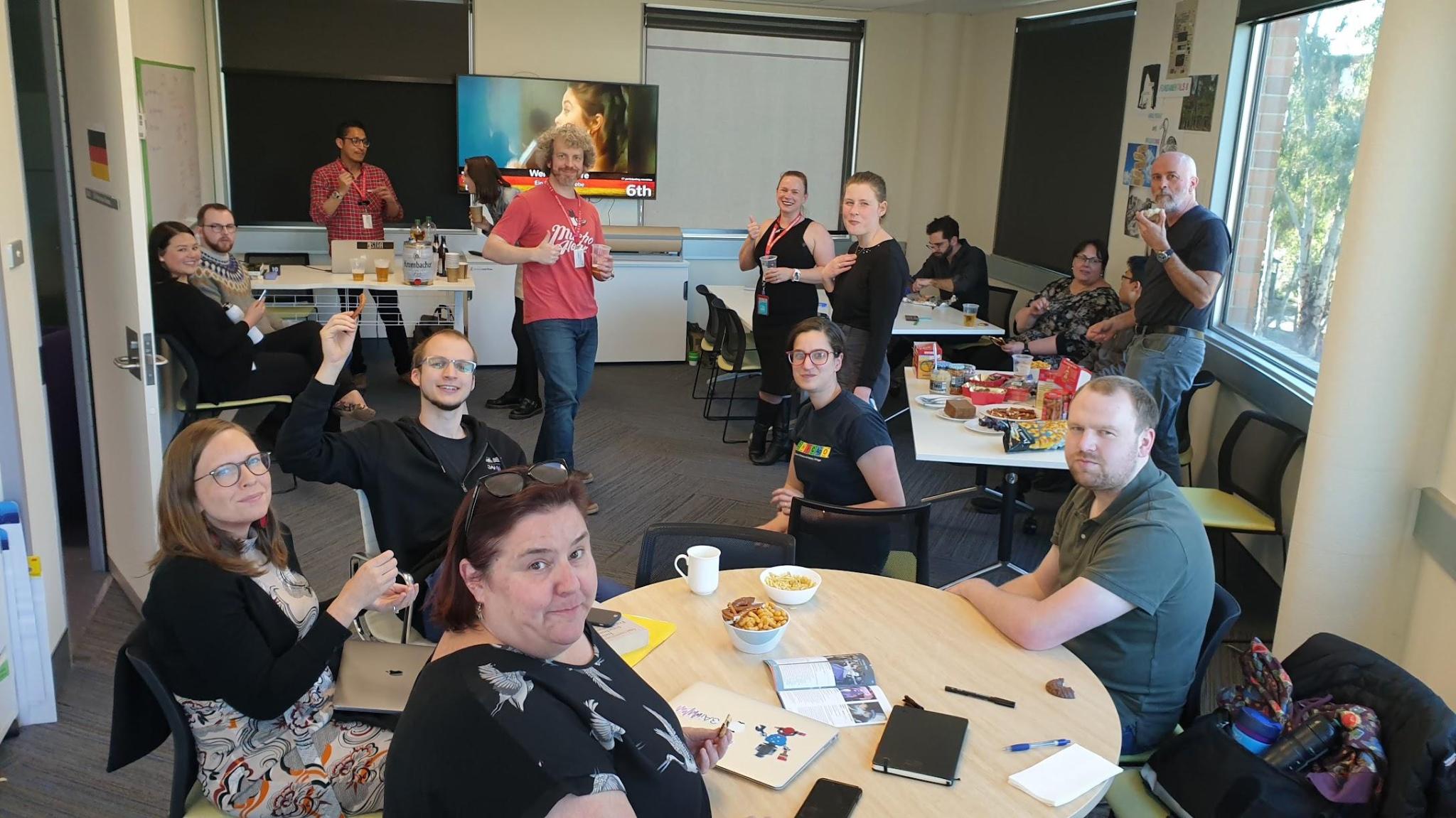
Alison was a deeply social person, always attempting to make networks and groups around her wider and more welcoming. She instigated many social outings, particularly for those of us who had moved interstate to attend the Masters program. We cherish many fond memories of Byron Bay and shopping trips and picnics. In particular, she joined some of the cohort on a skiing trip – even though she didn’t ski! She went for the people.

After graduating the Master in Applied Cybernetics, Alison went on to contribute to the program by supporting the establishment and delivery of the first Cybernetics Demo Day and running the successful pathfinding program, which helped connect graduates and their newly acquired skills in interrogating and shaping systems with employment opportunities in government and industry.
Later, Alison worked as Program Manager for Inspiring South Australia, overseeing a grants program which enabled tens of thousands of people to engage with science, particularly those under-represented in STEM: First Nations peoples, women and girls, and those with disabilities. Here, she helped deliver South Australia’s first First Nations Science Festival, which was gifted the Kaurna language name Payirri-apinthirlu naalityangka, meaning ‘investigate with you all’.
Alison hosted and produced the award-winning Be Curious mini-series with Channel 44. The series premiered in March 2024 on Channel 44 and CTV+ as a three-episode series about the science and technology history of Adelaide’s North Terrace institutions; it was her first time as a TV presenter.
Alison felt deeply that understanding the social history of technology made us better practitioners; that by recognising the mistakes of the past we could avoid replicating them in the present. It was no surprise that she encouraged us to attend the Radical Textiles exhibition at the South Australian Museum, where we were reminded of the historical fight for equity, inclusion and diversity, and the need to continue these efforts into the AI age.

Right: Equal Before the Law, Women’s Suffrage Centenary Tapestries Parliament of South Australia. Adelaide cotton, wool, linen. Kay LAWRENCE, designer 1993–94 born Canberra 1947.
Image credit: Kathy Reid CC-BY
In 2025 Alison received the Unsung Hero of Science Communication Award, presented as part of South Australia’s National Science Week celebration, where her assiduous endeavours to make science more inclusive, more accessible, and above all, more human, were fittingly recognised.

Alison died from complications of metastatic breast cancer on the evening of Friday 2 October, in her hometown of Adelaide, on Kaurna Country, surrounded by loved ones.