
Today members of the School of Cybernetics and our colleges from across the College of Systems and Society, travelled to Sydney for a very special tour around the Data Dreams Exhibit at the Museum of Contemporary Art Australia (MCA).
Data Dreams: Art and AI is an exhibition that invites audiences to reflect on the evolving relationship between human and machine intelligences through experiencing art from 10 boundary-pushing artists from across the globe.
These 10 international artists include our own Professor Angie Abdilla, and our 2022-2023 Cybernetic Imagination Resident Kate Crawford.
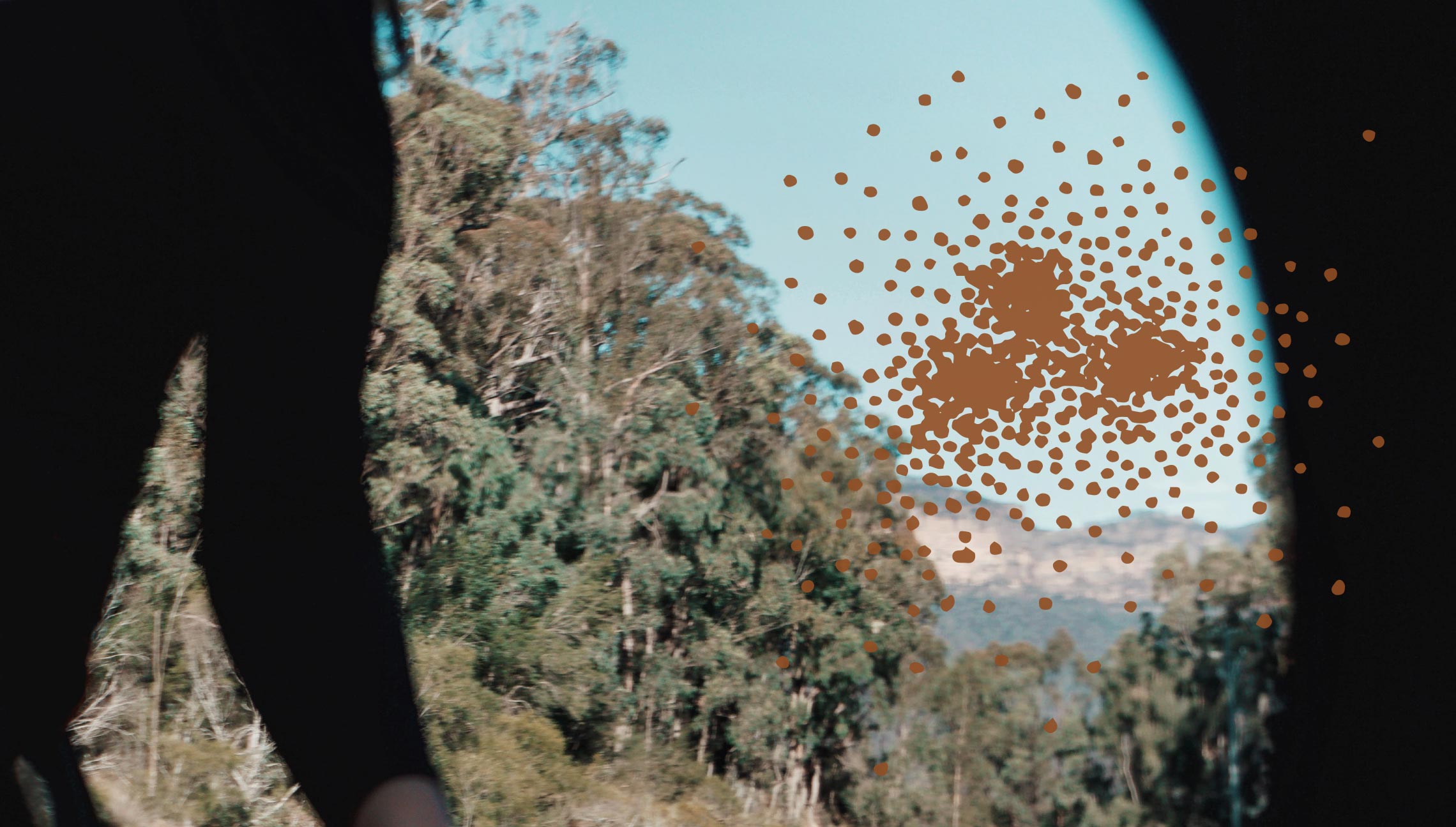
Our special tour today involves an introduction to the work Meditation on Country by Professor Angie Abdilla.

Angie welcomes us to the Learning space at the MCA where she talks us through the process of creating Meditation on Country. This work builds on relationships of “sky, water, and earth country and how these three are always known in relation to each other”.
“Meditation on Country works with the creation story of the universe”, the big bang, to “celebrate the veracity of Indigenous knowledges”.
Angie’s work is in essence, “a cross-cultural simulation, colliding cultural perspectives together”. Meditation on Country creates a space for you to have and feel these moments of cross-cultural collisions, it “positions your body as a vessel and a conduit to these knowledges.

Angie’s work has three conceptual ties, bringing together three different realities. Meditation on Country brings together “the power of seeing country through the story of water” with “interrogations of the limits of large language modules and information degradation” (as symbolized through the morphing of Australia birds) and “an awareness to the alarming reliance on large language models and couples these with the extinction rates of native Australian Birds”.

Meditation on Country holds “the uncertainties between realities and gives a home to the generative space of this project”, which can be difficult spaces to sit in and with.
Angie has been curious about “lossiness and signal loss” for quite some time. Meditation on Country explores what’s been lost in the signal degradation of our current very technical cultural experience. “All technology is cultural,” Angie reminds us. “Technology is a cultural practice.”

We ended our time with Angie through an open Q&A at the exhibition’s entrance, where Angie spoke to the different creative and technical decisions behind Meditation on Country.
Each unwrapped layer of meaning bringing with it a fresh desire to revisit Meditation on Country.
We are so proud of Professor Angie Abdilla, and the work she produced as an inaugural Imagination Resident.

Professor Angie Abdilla is a Palawa women, a creative technologist, and Director of Old Ways, New. She works with Indigenous Knowledge Systems and technology. Read more about Angie in her bio.